In the fast-paced digital age, businesses across various industries are recognizing the transformative potential of artificial intelligence (AI). Whether it’s optimizing operations, enhancing customer experiences, or gaining a competitive edge, AI has become a game-changer. However, harnessing the power of AI isn’t always straightforward. This is where AI consulting services come into play, guiding organizations on their AI journey. In this article, we will explore the AI consulting landscape, its significance, and the key considerations for businesses looking to engage with AI consultants.
The Rise of AI Consulting Services

Artificial intelligence has evolved from a buzzword to a vital tool for businesses. From predictive analytics to natural language processing, AI technologies offer a wide array of capabilities. However, implementing AI solutions requires more than just purchasing software or hardware; it necessitates expertise in AI algorithms, data science, and industry-specific knowledge. This is where AI consulting services fill the gap.
AI consulting services encompass a range of activities, from strategic planning and AI readiness assessments to the development and deployment of AI models. These services have grown in tandem with the increasing adoption of AI across industries such as healthcare, finance, retail, and manufacturing.
The Role of AI Consultants
AI consultants are the architects of AI-driven transformations within organizations. They bring a wealth of technical knowledge and industry experience to the table, enabling businesses to unlock AI’s full potential. Here are some key roles and responsibilities of AI consultants:
- Assessment and Strategy Development: AI consultants begin by understanding an organization’s specific goals and challenges. They assess the current infrastructure, data readiness, and AI maturity. Based on this assessment, they formulate a strategic roadmap for AI adoption.
- Data Analysis and Preparation: Data is the lifeblood of AI. AI consultants help organizations gather, clean, and prepare data for machine learning models. This involves data engineering, data labeling, and data governance.
- Model Development and Training: AI consultants are experts in developing machine learning models tailored to an organization’s needs. They select the appropriate algorithms, train models on historical data, and fine-tune them for optimal performance.
- Integration and Deployment: Once AI models are ready, consultants oversee their integration into existing systems. This may involve working with IT teams to ensure seamless deployment and monitoring of AI solutions.
- Continuous Improvement: AI is not a one-time project; it’s an ongoing process. AI consultants help organizations monitor model performance, make necessary adjustments, and stay current with the latest AI advancements.
Why Businesses Need AI Consultants
Now, let’s delve into the reasons why businesses turn to AI consulting services:
- Expertise Gap: Most organizations lack in-house expertise in AI and machine learning. AI consultants bridge this gap by providing access to specialized knowledge and skills.
- Cost-Effective Solutions: Instead of building an AI team from scratch, which can be costly and time-consuming, businesses can leverage AI consulting services as a more cost-effective option.
- Customized Solutions: AI consultants tailor solutions to an organization’s unique requirements, ensuring that AI aligns with the company’s goals and industry demands.
- Faster Time-to-Market: With the help of AI consultants, businesses can accelerate their AI initiatives, getting ahead of competitors and realizing ROI sooner.
- Risk Mitigation: AI projects come with risks, such as data privacy concerns and model bias. AI consultants are well-versed in risk mitigation strategies, helping organizations navigate these challenges.
- Scalability: Consultants provide guidance on how to scale AI solutions as business needs evolve, ensuring long-term success.
Choosing the Right AI Consulting Partner
Selecting the right AI consulting partner is critical to the success of AI initiatives. Here are some factors to consider:
- Expertise: Look for consultants with a strong track record in AI and data science. Check their experience in your industry, as domain knowledge is often crucial.
- References and Case Studies: Request references and case studies from previous clients to gauge the consultant’s capabilities and results.
- Transparency: Ensure that the consultant is transparent about their methodologies, costs, and timelines.
- Collaboration: Effective collaboration is key. Choose a consultant that is willing to work closely with your internal teams and transfer knowledge.
- Ethics and Compliance: Ensure that the consultant follows ethical AI practices and complies with relevant regulations, especially if handling sensitive data.
- Scalability: Consider whether the consultant can support your AI journey in the long term, especially if you plan to scale AI adoption.
- Communication: Clear and open communication is essential. Choose a consultant who can explain complex AI concepts in understandable terms.
Conclusion
AI consulting services play a pivotal role in helping organizations harness the potential of artificial intelligence. As businesses strive to stay competitive and innovative, partnering with AI consultants can be a strategic move. These experts bring the technical prowess, industry insights, and guidance needed to navigate the complex AI landscape. However, it’s crucial to choose the right consulting partner that aligns with your business goals and values. In the next article in this series, we will delve deeper into the considerations for selecting the ideal AI consulting services for your organization.
Choosing the Right AI Consulting Services
In our previous article, “Understanding the AI Consulting Landscape,” we explored the growing importance of AI consulting services in helping organizations harness the power of artificial intelligence. Now that we understand the significance of AI consultants, it’s crucial to delve deeper into the process of selecting the right AI consulting services for your specific needs. In this article, we will provide a comprehensive guide to help you make an informed decision when choosing your AI consulting partner.
1. Define Your Objectives and Needs
Before embarking on the journey of selecting an AI consulting service, it’s essential to define your objectives and needs clearly. Consider the following questions:
- What specific AI goals do you want to achieve?
- What are the pain points or challenges within your organization that AI can address?
- Do you have a budget in mind for AI consulting services?
- What is your expected timeline for implementing AI solutions?
By having a clear understanding of your goals and constraints, you can communicate your requirements effectively to potential AI consulting partners.
2. Assess Industry Expertise
AI is not a one-size-fits-all solution. Different industries have unique challenges and requirements when it comes to implementing AI technologies. It’s crucial to find an AI consulting partner with expertise in your industry. Here’s how to assess industry expertise:
- Review their client portfolio: Look for AI consulting firms that have worked with organizations in your industry or a closely related field. Case studies and client testimonials can provide insights into their industry experience.
- Check for domain knowledge: During initial discussions with potential consultants, assess their understanding of your industry’s specific challenges and regulations. A consultant who grasps these nuances is more likely to provide tailored solutions.

3. Evaluate Technical Expertise
Technical proficiency is a cornerstone of effective AI consulting. To evaluate a consulting firm’s technical expertise, consider the following factors:
- Team qualifications: Inquire about the qualifications and experience of the consulting team. Are they proficient in machine learning, data science, and relevant programming languages (e.g., Python, R)? Look for certifications or advanced degrees in AI-related fields.
- Past projects: Request detailed information on previous AI projects the consulting firm has undertaken. Pay attention to the complexity of the projects, the technologies used, and the outcomes achieved.
- Technology stack: Ensure that the consulting firm is well-versed in the latest AI tools and frameworks. The ability to adapt to evolving AI technologies is critical for long-term success.
4. Assess Data Capabilities
High-quality data is the lifeblood of AI. Assess the consulting firm’s data capabilities, including:
- Data collection and integration: How does the firm approach data collection, data cleaning, and data integration? Are they experienced in handling large and diverse datasets?
- Data privacy and security: Given the sensitivity of data, it’s vital to ensure that the consulting firm follows best practices for data privacy and security. Inquire about their data governance policies and compliance with relevant regulations (e.g., GDPR, HIPAA).
5. Review Methodologies and Approaches
Understanding the methodologies and approaches used by a consulting firm is crucial. This includes:
- Project management: Inquire about the consulting firm’s project management practices. How do they plan, execute, and monitor AI projects? Are they transparent about project milestones and timelines?
- AI model development: Gain insights into their approach to AI model development. Do they follow industry best practices for model selection, training, and evaluation? How do they address issues like bias and fairness in AI models?
- Evaluation and testing: Ask about their methods for evaluating and testing AI solutions. How do they ensure that AI models perform as expected in real-world scenarios?
6. Request References and Case Studies
One of the most effective ways to gauge the capabilities of an AI consulting firm is by requesting references and case studies. Contact their previous clients and ask about their experiences, the outcomes of the projects, and the consulting firm’s strengths and weaknesses. Case studies provide concrete examples of the firm’s ability to deliver results.
7. Consider Collaboration and Communication
Effective collaboration and communication are essential for a successful partnership with an AI consulting firm. Here are some considerations:
- Collaboration approach: Discuss how the consulting firm plans to collaborate with your internal teams. Will they provide training and knowledge transfer to your employees?
- Communication channels: Clarify the communication channels and frequency of updates. Clear and open communication is critical to address any issues or changes during the project.
8. Ethical and Regulatory Compliance
AI consulting projects often involve handling sensitive data and making decisions that impact individuals. Ensure that the consulting firm follows ethical AI practices and complies with relevant regulations. They should be able to explain how they address issues like bias, fairness, and transparency in AI models.
9. Evaluate Cost and Value
While cost is a significant consideration, it’s important to assess the value you will receive from AI consulting services. Compare the cost of services with the expertise, experience, and expected outcomes offered by the consulting firm. Keep in mind that investing in high-quality AI consulting can lead to long-term benefits and cost savings through optimized AI solutions.
10. Seek Flexibility and Scalability
Consider whether the consulting firm can scale AI solutions as your business needs evolve. Flexibility is crucial as AI projects may expand or pivot based on changing circumstances. A consulting partner that can adapt to these changes is valuable.
Conclusion
Choosing the right AI consulting services is a critical step in your organization’s AI journey. By defining your objectives, assessing industry and technical expertise, and evaluating methodologies and approaches, you can make an informed decision. Remember to prioritize ethical considerations, data security, and collaboration when selecting an AI consulting partner. In the next article of this series, we will explore the steps involved in the successful implementation of AI consulting services and how to ensure that your AI projects deliver tangible results.
Machine Learning and Data Science Consulting: A Comprehensive Guide
In our previous articles, we explored the importance of AI consulting services and how to choose the right consulting partner for your organization’s AI initiatives. In this article, we will dive deeper into a specific subset of AI consulting—Machine Learning (ML) and Data Science consulting. These specialized services are instrumental in harnessing the power of data to drive informed decision-making, predictive analytics, and process optimization.
Understanding Machine Learning and Data Science Consulting
Machine learning and data science are two interconnected fields that have gained immense significance in recent years. Machine learning involves the development of algorithms and models that enable systems to learn from data and make predictions or decisions without being explicitly programmed. Data science, on the other hand, encompasses the broader process of collecting, cleaning, analyzing, and extracting insights from data.
Machine Learning and Data Science consulting services combine the technical expertise of data scientists and machine learning engineers with domain knowledge to assist organizations in extracting actionable insights from their data. These insights can be used to optimize operations, improve customer experiences, and gain a competitive edge.
The Steps Involved in ML and Data Science Consulting
A typical ML and Data Science consulting engagement involves several key steps, each designed to extract value from data. Let’s explore these steps in detail:
**1. Data Collection and Preprocessing:
- Data Gathering: Consultants begin by collecting relevant data from various sources. This can include structured data from databases, unstructured data from text documents, or even data from IoT devices.
- Data Cleaning: Raw data is often noisy and may contain errors. Data scientists clean and preprocess the data to remove inconsistencies, missing values, and outliers. Proper data cleaning is crucial for accurate modeling.
**2. Exploratory Data Analysis (EDA):
- Data Exploration: EDA involves visualizing and summarizing data to gain initial insights. Data scientists use techniques like histograms, scatter plots, and correlation matrices to understand the data’s characteristics.
- Feature Engineering: Features or variables that are relevant to the problem at hand are selected or created. Feature engineering can significantly impact model performance.
**3. Model Development and Training:
- Algorithm Selection: Data scientists select the most appropriate machine learning algorithms based on the nature of the problem (classification, regression, clustering, etc.) and the data.
- Model Training: Models are trained using historical data. This involves feeding the data into the selected algorithm and adjusting model parameters to optimize performance.
- Cross-Validation: To assess model generalization, cross-validation techniques are used to ensure that the model performs well on unseen data.
**4. Model Evaluation and Validation:
- Performance Metrics: Data scientists evaluate model performance using appropriate metrics. For classification tasks, this may include accuracy, precision, recall, and F1-score. For regression tasks, metrics like Mean Absolute Error (MAE) or Root Mean Square Error (RMSE) are used.
- Validation: Models are validated on a separate test dataset to ensure they perform well in real-world scenarios.
**5. Deployment and Integration:
- Model Deployment: Once a model is deemed successful, it is deployed into the organization’s systems. This can involve integrating the model into existing software or creating APIs for real-time predictions.
- Monitoring: Continuous monitoring of model performance is essential. Data scientists set up monitoring systems to detect any degradation in model performance or data drift.
**6. Maintenance and Iteration:
- Continuous Improvement: ML and data science consulting doesn’t end with deployment. Models must be continually monitored and updated to account for changing data patterns and evolving business needs.
- Feedback Loop: Organizations should establish a feedback loop where insights from the model are used to improve processes and strategies.
Choosing the Right ML and Data Science Consulting Partner

Selecting the right ML and Data Science consulting partner is crucial for the success of data-driven initiatives. Here are some considerations:
**1. Expertise and Experience:
- Technical Skills: Ensure that the consulting team possesses strong technical skills in machine learning, data science, and relevant programming languages (Python, R, etc.).
- Industry Experience: Look for consultants with experience in your industry. They should understand your industry’s unique challenges and opportunities.
**2. Project Portfolio:
- Case Studies: Request case studies or examples of past projects. These provide insights into the consulting firm’s capabilities and the impact of their work.
- References: Reach out to previous clients to gather feedback on their experiences working with the consulting firm.
**3. Communication and Collaboration:
- Communication Skills: Effective communication is essential for collaboration. Ensure that the consulting team can explain complex concepts in a clear and understandable manner.
- Collaboration Approach: Discuss how the consulting firm plans to collaborate with your internal teams. They should be willing to transfer knowledge and empower your staff.
**4. Ethical Considerations:
- Ethical Practices: Ensure that the consulting firm follows ethical data practices, including privacy and bias mitigation. Ethical AI is becoming increasingly important.
**5. Cost and ROI:
- Value Proposition: Evaluate the value you expect to receive from the consulting engagement in relation to the cost. Consider the long-term return on investment (ROI) of data-driven insights.
**6. Scalability and Flexibility:
- Scalability: Consider whether the consulting firm can support your organization’s growth and evolving data needs.
- Flexibility: AI and data science projects may change direction. A flexible consulting partner can adapt to these changes.
Conclusion
Machine Learning and Data Science consulting services have the potential to unlock valuable insights from your organization’s data. By following a systematic approach that includes data collection, preprocessing, modeling, evaluation, deployment, and continuous improvement, these services enable data-driven decision-making and process optimization. When choosing an ML and Data Science consulting partner, prioritize expertise, industry experience, communication, and ethical practices. In the next article in this series, we will explore the emerging field of generative AI consulting and how it is revolutionizing content generation and creative tasks.
Generative AI Consulting: Unleashing Creative Potential
In our previous articles, we explored the realms of AI consulting, including AI’s broader landscape, selecting the right AI consulting services, and the intricacies of Machine Learning (ML) and Data Science consulting. Now, we embark on a journey into the fascinating world of generative AI consulting, a burgeoning field that is revolutionizing content creation, creative tasks, and personalization in various industries.
Understanding Generative AI
Generative AI is a subset of artificial intelligence focused on creating content or data rather than just analyzing it. At its core, generative AI leverages deep learning models, particularly recurrent neural networks (RNNs) and variants like Gated Recurrent Units (GRUs) and Long Short-Term Memory (LSTM) networks, to generate new, original content.
Generative AI systems can create a wide range of content, including text, images, music, and more. These systems are trained on vast datasets to learn patterns and relationships within the data, allowing them to generate content that resembles human-created work.
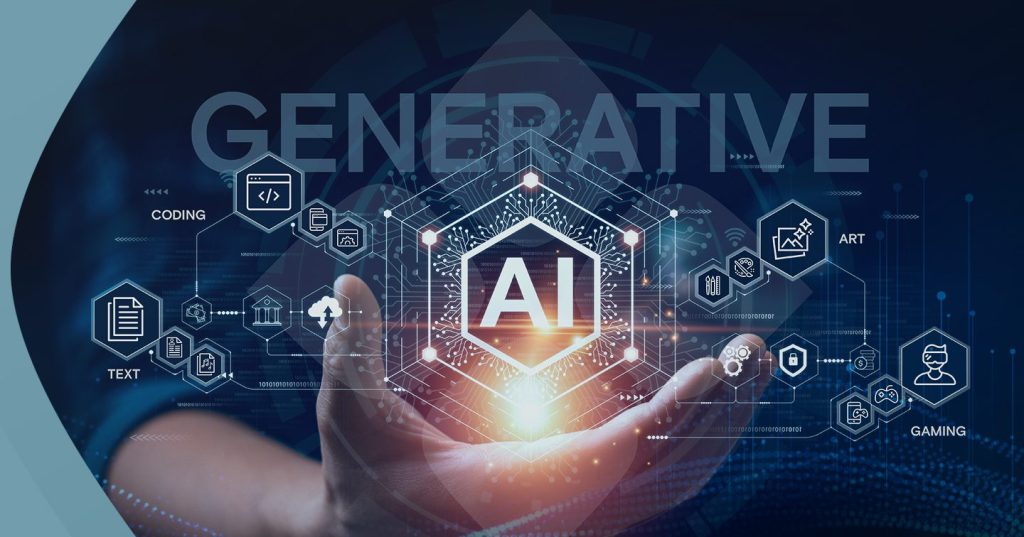
Applications of Generative AI
Generative AI has found applications in numerous domains, transforming the way we create, personalize, and interact with content. Here are some key areas where generative AI consulting services are making a significant impact:
**1. Content Generation:
- Text Generation: Generative AI models like GPT-3 and GPT-4 have gained fame for their ability to generate human-like text. These models can create articles, stories, marketing copy, and even code snippets.
- Image Generation: Deep generative models like Generative Adversarial Networks (GANs) can create realistic images, artwork, and design elements.
- Music and Audio Generation: AI-driven music composition tools can create original compositions, soundtracks, and even mimic the style of famous musicians.
**2. Personalization:
- Content Personalization: Generative AI can help personalize content recommendations, product suggestions, and marketing messages based on user preferences and behavior.
- Chatbots and Virtual Assistants: AI-powered chatbots, like those used in customer support, can provide more human-like responses and adapt to individual user needs.
**3. Creative Assistance:
- Artistic Creation: Generative AI tools can assist artists and designers by generating ideas, designs, or even entire artworks.
- Writing Assistance: Authors, journalists, and content creators can use generative AI to overcome writer’s block or improve their writing style.
**4. Simulations and Training:
- Simulation: Generative AI can create realistic simulations for training purposes in fields like aviation, medicine, and gaming.
- Training Data Augmentation: It can generate additional training data for machine learning models when real data is limited.
Choosing the Right Generative AI Consulting Partner
Selecting the right generative AI consulting partner is crucial to leverage the potential of this cutting-edge technology effectively. Here are some considerations when evaluating generative AI consulting services:
**1. Expertise and Experience:
- Technical Skills: Ensure that the consulting team possesses expertise in generative AI technologies, including deep learning, GANs, and recurrent neural networks.
- Domain Knowledge: Depending on your industry, domain knowledge can be crucial. For creative applications, understanding the nuances of art, design, or writing may be essential.
**2. Project Portfolio:
- Case Studies: Request case studies or examples of previous generative AI projects. Assess the quality and diversity of content generated by their models.
- References: Contact previous clients to gain insights into their experiences with the consulting firm and the outcomes achieved.
**3. Communication and Collaboration:
- Communication Skills: Effective communication is vital, especially when discussing creative tasks. Ensure that the consulting team can collaborate with your creative teams and understand your vision.
- Collaboration Approach: Discuss how the consulting firm plans to work with your internal teams. They should be flexible in adapting to your creative processes.
**4. Ethical Considerations:
- Ethical Practices: Ethical considerations are critical when using generative AI. Ensure that the consulting partner follows ethical guidelines, especially in content generation and personalization.
**5. Cost and ROI:
- Value Proposition: Evaluate the value generative AI consulting services offer in relation to the cost. Consider the potential for increased efficiency, creative output, and customer engagement.
**6. Scalability and Adaptability:
- Scalability: Consider whether the consulting firm can support your organization’s growing needs for generative AI content.
- Adaptability: Creative projects can evolve, and the consulting partner should be adaptable to changing creative requirements.
**7. Data and Privacy:
- Data Handling: Understand how the consulting partner handles data used for training generative models. Data privacy and security should be a priority.
**8. Intellectual Property (IP) Rights:
- Ownership: Clarify who owns the generated content. Ensure that you retain the necessary rights to use and distribute the content as needed.
**9. Testing and Evaluation:
- Content Evaluation: Establish criteria for evaluating the quality of generated content. Ensure that the consulting partner can meet your standards.
**10. Continual Improvement and Maintenance:
- Model Maintenance: Generative AI models may require ongoing training and improvement. Discuss how the consulting firm plans to handle model maintenance.
Conclusion
Generative AI consulting services represent a gateway to unleashing creative potential and enhancing content generation and personalization. By leveraging generative AI technologies, organizations can create, adapt, and personalize content at a scale previously unimaginable.
Building Enterprise AI Chatbots: A Step-by-Step Guide
**1. Understanding Enterprise AI Chatbots
Enterprise AI chatbots, also known as virtual assistants or conversational agents, are AI-powered software applications that engage in text or voice-based conversations with users. They are designed to provide information, answer questions, complete tasks, and even simulate human-like interactions. Enterprise chatbots find applications in customer support, sales, marketing, HR, and various other business functions.
**2. Identify Use Cases and Objectives
Before embarking on the development of an enterprise AI chatbot, it’s crucial to identify the specific use cases and objectives. Ask yourself:
- What are the primary tasks you want the chatbot to perform? (e.g., answering customer inquiries, booking appointments, providing product information)
- What are your business goals and key performance indicators (KPIs) for the chatbot? (e.g., reducing customer support response times, increasing lead generation)
- Which departments or functions within your organization will benefit from the chatbot? (e.g., sales, customer service, IT)
A clear understanding of your chatbot’s purpose and goals will guide the development process.
**3. Select the Right AI Platform or Framework
Choosing the right AI platform or framework is a crucial decision. There are several options available, each with its own strengths and capabilities. Common choices include:
- Commercial Chatbot Platforms: Platforms like Dialogflow, Microsoft Bot Framework, and IBM Watson Assistant offer user-friendly tools and integration capabilities.
- Open-Source Frameworks: Open-source frameworks like Rasa and Botpress provide greater flexibility and customization options but may require more technical expertise.
- Custom Development: For highly specialized chatbot applications, custom development using machine learning libraries and frameworks like TensorFlow or PyTorch may be necessary.
The choice largely depends on your project’s complexity, budget, and long-term scalability.

**4. Data Collection and Preprocessing
Data is the lifeblood of any AI chatbot. You’ll need historical data to train your chatbot’s language model. This data might include past customer interactions, FAQs, product information, and more. The data should be cleaned and preprocessed to remove noise and irrelevant information.
**5. Natural Language Processing (NLP) and Language Model Training
NLP is the key to enabling chatbots to understand and generate human language. You’ll need to train your chatbot’s language model using machine learning techniques. Steps involved include:
- Data Tokenization: Breaking down sentences or phrases into individual words or tokens.
- Word Embeddings: Representing words as numerical vectors to capture semantic meaning.
- Model Training: Using machine learning algorithms to train the language model on your preprocessed data.
- Fine-Tuning: Fine-tuning the model on your specific use case to improve its performance.
**6. Dialog Flow Design
Designing the dialog flow is a critical aspect of chatbot development. This involves defining the conversation paths, user prompts, and responses. Consider the following:
- Intents: Define user intents (e.g., booking a flight, checking an account balance) and the corresponding responses.
- Entities: Identify entities (e.g., dates, locations, product names) that the chatbot needs to extract from user input.
- Context Management: Implement context handling to maintain a coherent conversation even when users provide incomplete or ambiguous information.
- Fallback Mechanism: Create a fallback mechanism for handling user queries that the chatbot doesn’t understand.
**7. Integration with Backend Systems
For an enterprise chatbot to be effective, it often needs to integrate with backend systems and databases to fetch real-time information or perform actions. This may involve integrating with CRM systems, inventory databases, or external APIs.
**8. Testing and Quality Assurance
Testing is a crucial step in chatbot development to ensure that it performs as expected. Types of testing include:
- Functional Testing: Verify that the chatbot can handle intended user interactions.
- Usability Testing: Collect user feedback to assess the chatbot’s user-friendliness.
- Regression Testing: Ensure that new updates or changes don’t introduce bugs.
- Security Testing: Check for vulnerabilities and data protection compliance.
**9. User Training and Feedback Loop
Once your chatbot is deployed, it’s essential to provide training data and feedback to improve its performance over time. User interactions can be used to identify areas where the chatbot needs improvement.
**10. Deployment and Scaling
Deploy your chatbot to the desired platforms, such as your website, mobile app, or messaging apps like Facebook Messenger or WhatsApp. Ensure that the chatbot can handle concurrent users and traffic. Scalability is vital as your chatbot gains popularity.
**11. Monitoring and Maintenance
Continuously monitor your chatbot’s performance, user interactions, and system health. Implement mechanisms for handling unexpected issues and outages. Regularly update your chatbot’s knowledge base and language model to stay relevant.
**12. Privacy and Compliance
Ensure that your chatbot complies with data privacy regulations (e.g., GDPR, CCPA). Safeguard user data and communicate transparently about data usage.
**13. User Education and Promotion
Introduce your chatbot to users and educate them on how to interact with it effectively. Promote the chatbot’s availability through various channels, such as your website, social media, and email.
**14. Feedback Loop and Iteration
Collect user feedback and analyze chatbot performance metrics. Use this feedback to make iterative improvements to the chatbot’s responses, dialog flow, and overall capabilities.
**15. Security Considerations
Ensure that your chatbot is secure from both technical and data privacy perspectives. Implement authentication and authorization mechanisms to protect sensitive information.
Conclusion
Building an enterprise AI chatbot is a complex but rewarding endeavor. When done right, a chatbot can enhance customer service, streamline business operations, and provide valuable insights into user behavior. By following the steps outlined in this comprehensive guide, you can embark on a successful journey to create a chatbot that adds value to your organization.
 AI Deep Learning