Artificial Intelligence (AI) has become a transformative force in our world, reshaping industries, automating processes, and augmenting human capabilities. Within the vast realm of AI, one subfield stands out for its ability to create content, images, and even music that is indistinguishable from human-generated work. This subfield is Generative AI, and it’s fundamentally changing the way we interact with technology and the possibilities of creative expression. In this article, we will explore the power of Generative AI, its mechanisms, and delve into its diverse range of use cases and applications.
Understanding Generative AI
Generative AI is a subset of artificial intelligence that focuses on training machines to generate content that resembles human-created output. This is achieved through neural networks, specifically generative models, which learn to produce data similar to that which they are trained on. The two most prominent forms of generative AI models are Generative Adversarial Networks (GANs) and Variational Autoencoders (VAEs).
- Generative Adversarial Networks (GANs): GANs consist of two neural networks, a generator, and a discriminator. The generator aims to create data, and the discriminator’s role is to differentiate between real and generated data. These two networks work in tandem, with the generator constantly improving its output to fool the discriminator, ultimately producing data that is often indistinguishable from human-created content.
- Variational Autoencoders (VAEs): VAEs work differently from GANs but also generate content. They focus on encoding input data into a lower-dimensional representation and then decode it back to the original format. This process allows for the generation of data that is statistically similar to the training dataset.
Use Cases and Applications
Generative AI’s ability to create content has led to a wide array of applications across various industries. Let’s explore some of the most prominent ones:
1. Image Generation and Manipulation:
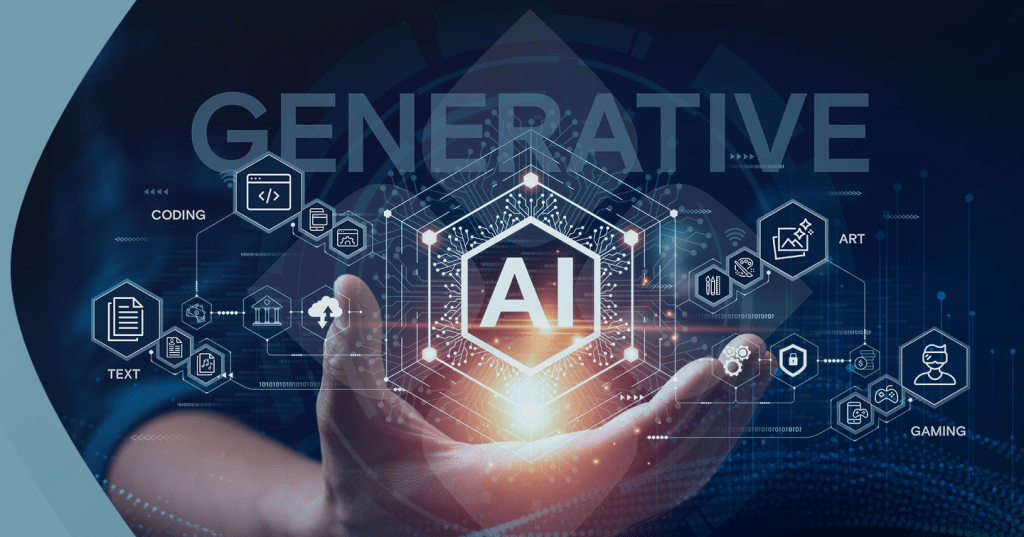
Generative AI has revolutionized image generation and manipulation. It can be used to create realistic images of objects, landscapes, or even entirely imaginary scenes. For instance, AI-powered tools like DALL·E can generate images from textual descriptions, bridging the gap between text and visuals. This technology has applications in advertising, design, and entertainment, allowing for quick and cost-effective content creation.
2. Deepfake Technology:
While the term ‘deepfake’ often carries a negative connotation, it’s essential to acknowledge the technological advancements it represents. Deepfake technology uses generative AI to manipulate videos and images to make them appear as if they feature individuals or scenarios that never existed. This can be used for entertainment, but also raises important ethical and security concerns.
3. Content Creation and Text Generation:
Generative AI can be employed in the creation of text content, including news articles, reports, or even creative writing. OpenAI’s GPT-3, for instance, can generate coherent, contextually relevant text. Content creation tools powered by GPT-3 are already in use, simplifying tasks like drafting emails, generating code, or even producing creative writing pieces.
4. Art and Music Generation:
The realm of art and music has seen a significant transformation through generative AI. AI algorithms are capable of composing music or creating artwork in various styles. Musicians use AI to generate music and discover novel melodies, while artists employ AI to assist in creating digital art or unique visual effects.
5. Personalization and Recommendation Systems:
Generative AI plays a crucial role in personalization and recommendation systems. Whether it’s suggesting products on e-commerce platforms, curating playlists on music streaming services, or recommending content on social media, AI-powered recommendation engines rely on generative models to understand user preferences and tailor content accordingly.
6. Healthcare and Drug Discovery:
In healthcare, generative AI is used for various purposes. It aids in generating synthetic medical data for training machine learning models. It can also assist in drug discovery by simulating molecular structures, which accelerates the identification of potential drug candidates.
7. Natural Language Processing:
Language models powered by generative AI are essential in natural language processing tasks. They can understand and generate human-like text, making them indispensable for chatbots, language translation, sentiment analysis, and more.
Challenges and Ethical Considerations
While generative AI presents immense potential, it also brings forth significant challenges. Some of the primary concerns include:
- Ethical Use: The technology can be misused for creating fraudulent content or deepfakes, causing harm or misinformation.
- Bias and Fairness: Generative AI models can perpetuate biases present in training data, leading to unfair or discriminatory outcomes.
- Security: There’s a need to protect generative AI models from adversarial attacks to ensure the integrity of generated content.
Conclusion
Generative AI is a powerful force in the world of artificial intelligence, enabling the creation of content that was once the exclusive domain of human creativity. It has broad-ranging applications across industries, from entertainment and art to healthcare and recommendation systems. However, its power also comes with ethical and security challenges that require careful consideration. As we move forward, understanding and responsibly using generative AI is crucial to harness its potential while mitigating its risks.
The Impact of AI in Media and Entertainment
The media and entertainment industry has been radically transformed by the advent of artificial intelligence (AI). From content creation and recommendation systems to immersive experiences, AI is reshaping how we consume and create media. In this article, we’ll explore the profound impact of AI in the media and entertainment sector, and how it’s revolutionizing the way we interact with content.
Content Creation and Augmentation
One of the most significant ways AI is changing the media and entertainment industry is by automating and enhancing content creation. AI-driven tools and technologies are now being used to generate, edit, and optimize various forms of media.
- Automated Journalism:AI algorithms, such as natural language generation (NLG), are increasingly being employed to generate news articles, sports reports, and financial summaries. Automated journalism systems can quickly process vast amounts of data and produce human-readable news pieces in real-time. This not only speeds up news reporting but also allows for personalized content generation, catering to the specific interests of readers.
- Video and Audio Editing:AI-powered tools are transforming the way video and audio content is edited. AI can automatically analyze and tag video footage or transcribe audio, making it easier for editors to find the right content quickly. Furthermore, AI-based software can perform complex video editing tasks, such as color correction and scene composition, with remarkable accuracy.
- Virtual Set Design:AI is used in the entertainment industry to design virtual sets for movies, TV shows, and gaming environments. It allows for the creation of realistic virtual worlds that are both visually captivating and cost-effective. AI algorithms can simulate lighting conditions, textures, and physics in a way that was previously labor-intensive and expensive.

Content Recommendation Systems
AI-driven recommendation systems have become an integral part of how we discover and consume media. These systems leverage user data, content metadata, and AI algorithms to suggest relevant content to users. They’re used in various media platforms, from streaming services to e-commerce websites.
- Personalized Content Discovery:Media streaming services like Netflix, Amazon Prime Video, and Spotify use AI to analyze user preferences and behaviors. This enables them to recommend movies, TV shows, and music tailored to each individual’s tastes. As a result, users spend less time searching for content and more time enjoying it.
- Improved User Engagement:By offering personalized recommendations, media platforms can increase user engagement and retention. When users discover content that resonates with them, they’re more likely to stay loyal to the platform and spend more time on it.
Immersive Experiences
AI is enhancing immersive experiences in both gaming and virtual reality (VR). These technologies are taking storytelling and gaming to new heights.
- AI in Gaming:AI is used to create non-player characters (NPCs) that exhibit realistic behaviors and adapt to player actions. Games can have procedurally generated content, intelligent enemies, and dynamic storylines that evolve based on player choices. For example, the game “The Elder Scrolls V: Skyrim” utilizes AI to create a dynamic and open world where NPCs have their own daily schedules and respond to in-game events.
- Virtual Reality and Augmented Reality:AI plays a pivotal role in enhancing VR and AR experiences. It can be used to generate realistic 3D environments, track user movements, and even offer real-time language translation in AR applications. The potential for education, training, and interactive storytelling is immense.
Challenges and Considerations
Despite its many benefits, AI in media and entertainment also raises challenges and ethical considerations.
- Privacy Concerns:The collection and utilization of user data to power recommendation systems have raised privacy concerns. Striking the right balance between personalization and data privacy is a complex issue.
- Algorithmic Bias:AI-driven content recommendation systems are prone to algorithmic bias, potentially reinforcing stereotypes or excluding certain groups. Addressing this issue is crucial to ensure fairness and diversity in media content.
- Monetization and Copyright:The use of AI for content generation and manipulation raises questions about copyright and intellectual property. Determining ownership and royalties in the context of AI-created content is an evolving challenge.
Conclusion
AI has become an indispensable force in the media and entertainment industry, transforming content creation, recommendation systems, and immersive experiences. Its ability to personalize content discovery and automate various production tasks is revolutionizing the way we consume media. However, addressing the ethical and privacy concerns associated with AI is essential for maintaining trust and ensuring responsible use.
Ensuring Security in AI Development: Challenges and Solutions
The rapid proliferation of artificial intelligence (AI) across industries has brought about transformative changes, but it has also opened up new frontiers in terms of security challenges. As AI systems become more integrated into our daily lives, securing them against potential threats and vulnerabilities is of paramount importance. In this article, we’ll explore the critical aspects of security in AI development, discussing the challenges and presenting solutions to ensure the integrity and reliability of AI systems.
Challenges in Securing AI Systems
Securing AI systems is a multifaceted endeavor, as these systems can be vulnerable to a variety of threats and challenges:
- Data Security:Data is the lifeblood of AI, and securing it is a primary concern. Sensitive data used for training AI models, such as personal information or proprietary company data, must be protected from unauthorized access and breaches. In addition, AI systems that make decisions based on data can be manipulated through data poisoning attacks, leading to biased or incorrect outcomes.
- Model Robustness:AI models can be vulnerable to adversarial attacks, where slight modifications to input data can lead to incorrect predictions. For example, an image recognition model can misclassify an image when small, imperceptible changes are made to it. Ensuring model robustness against these attacks is a significant challenge.
- Ethical Concerns:AI can perpetuate biases present in training data, leading to unfair or discriminatory outcomes. It’s essential to address the ethical concerns associated with AI systems, ensuring they make decisions that are just, unbiased, and align with societal values.
- Explainability and Transparency:Many AI systems are black boxes, making it difficult to understand why they make certain decisions. Ensuring the transparency and explainability of AI systems is critical, especially in sectors like healthcare, where it’s essential to understand the basis for medical diagnoses and treatment recommendations.
- Regulatory Compliance:AI developers must navigate a complex landscape of regulatory requirements. Ensuring compliance with regulations such as the General Data Protection Regulation (GDPR) and ensuring AI systems are transparent and accountable is a challenge that requires careful planning and monitoring.

Solutions for Securing AI Systems
To address the challenges of securing AI systems, developers and organizations can employ several strategies and best practices:
- Data Encryption and Privacy Preservation:Protect sensitive data by implementing robust encryption techniques. Utilize privacy-preserving methods such as federated learning, which enables model training without the need to centralize data, thereby reducing privacy risks.
- Regular Model Auditing:Regularly audit AI models for vulnerabilities and biases. Implement adversarial testing to identify and mitigate adversarial attacks. Open-source tools like IBM’s Adversarial Robustness Toolbox can help in this process.
- Ethical AI Development:Train AI developers and data scientists to be aware of ethical considerations. Develop guidelines for data collection, annotation, and model training that prioritize fairness and inclusivity.
- Explainable AI (XAI):Invest in developing explainable AI models. Techniques like LIME (Local Interpretable Model-Agnostic Explanations) and SHAP (SHapley Additive exPlanations) can help explain AI decisions, making the technology more transparent.
- Security Patch Management:Regularly update AI systems to apply security patches and updates. Vulnerabilities can be identified and addressed through a robust patch management process.
- User Training and Awareness:Educate end-users and organizations about potential AI-related security threats and best practices for using AI systems securely. This includes avoiding unsafe AI model deployments and interacting responsibly with AI systems.
- Collaboration with Cybersecurity Experts:Engage with cybersecurity experts who can evaluate AI systems for vulnerabilities and advise on best practices. Collaboration between AI and cybersecurity teams can enhance the overall security posture.
- Compliance Frameworks:Implement compliance frameworks that are aligned with regulatory requirements. Regularly review and update policies and procedures to ensure compliance with evolving regulations.
The Future of AI Security
The landscape of AI security is evolving as the technology matures and threats become more sophisticated. Looking ahead, several trends and developments are shaping the future of AI security:
- AI in Cybersecurity:AI will play an increasingly critical role in defending against AI-driven cyberattacks. AI systems can help in real-time threat detection and response.
- Automated Security Solutions:The integration of AI into security solutions will lead to automated threat detection and remediation, reducing the human response time in identifying and mitigating security risks.
- Regulatory Evolution:Regulations governing AI and data protection will continue to evolve. Organizations must remain agile and proactive in adapting to these changes.
- Research in AI Security:AI security will remain an active area of research. There will be ongoing efforts to develop more robust models, detection techniques, and ethical frameworks.
Conclusion
As AI continues to weave its way into various aspects of our lives and industries, ensuring the security of AI systems becomes more critical than ever. The challenges posed by data security, model robustness, ethical concerns, and transparency demand a proactive approach from developers and organizations. By implementing best practices and staying updated on the latest security trends, we can harness the transformative power of AI while mitigating the associated risks.
AI Use Cases in Information Technology: From IT Support to Automation
The information technology (IT) sector is no stranger to disruption, and artificial intelligence (AI) is driving another wave of transformative change. AI’s application in IT extends from streamlining support and troubleshooting processes to automating routine tasks and enhancing network security. In this article, we’ll explore the use cases of AI in information technology, highlighting how it’s reshaping the landscape of IT operations and support.
AI in IT Support and Troubleshooting
AI has emerged as a powerful tool in the IT support and troubleshooting domain, offering faster, more efficient solutions to common issues:
- Chatbots and Virtual Assistants:AI-powered chatbots and virtual assistants can provide instant, round-the-clock support to users. They handle routine inquiries, troubleshoot common problems, and guide users through various processes. Chatbots can also assist in creating support tickets and escalating complex issues to human operators when necessary.
- Predictive Maintenance:AI can be used to predict and prevent hardware failures and system crashes. By analyzing historical data and monitoring system performance in real-time, AI can identify potential issues and trigger maintenance before a problem becomes critical. This minimizes downtime and reduces the costs associated with reactive maintenance.
- Automated Root Cause Analysis:AI systems can quickly analyze logs and data to identify the root causes of IT issues. This capability is invaluable in resolving complex problems efficiently and minimizing the impact on business operations.
Automation of Routine IT Tasks
AI’s ability to automate routine tasks is revolutionizing IT operations by improving efficiency and reducing human error:
- Network and Server Management:AI can automatically manage and optimize network resources, making real-time adjustments to maximize performance and security. It can also automate server provisioning, scaling, and load balancing, reducing the administrative burden on IT teams.
- Patch Management:AI can identify and prioritize software patches and updates, ensuring that critical security vulnerabilities are addressed promptly. Automated patch management reduces the risk of security breaches due to unpatched systems.
- Password Reset and User Account Management:Routine tasks like password resets and user account management can be handled by AI-driven systems, freeing IT staff to focus on more complex and strategic responsibilities.
Enhanced Security through AI
AI plays a pivotal role in enhancing IT security, identifying and responding to threats in real-time:
- Intrusion Detection and Prevention:AI-driven intrusion detection systems continuously monitor network traffic and user behavior. They can identify unusual patterns that may indicate a security breach, enabling rapid response to potential threats.
- Behavioral Analytics:AI can create profiles of normal user and system behavior, making it easier to detect anomalous activities and potential security breaches. This approach is particularly effective in identifying insider threats.
- Threat Intelligence:AI tools can process and analyze vast amounts of threat intelligence data from various sources to provide actionable insights. This helps IT teams stay ahead of emerging threats and vulnerabilities.
AI in IT Operations Management
AI-driven IT operations management platforms help organizations streamline processes and optimize resource utilization:
- IT Service Management (ITSM):AI can be integrated into ITSM solutions to automate service requests, incident resolution, and change management processes. This reduces response times, improves service quality, and enhances the user experience.
- Capacity Planning:AI can predict future resource requirements based on historical data, allowing organizations to allocate resources efficiently and avoid overprovisioning.
- Cost Optimization:AI helps organizations identify cost-saving opportunities by optimizing resource utilization and recommending changes in IT infrastructure.
Challenges and Considerations
While AI offers substantial benefits in the IT sector, there are several challenges and considerations:
- Data Privacy and Security:As AI systems process large volumes of sensitive data, maintaining data privacy and security is crucial. Data breaches and misuse of personal information are significant concerns.
- Bias in AI Algorithms:AI algorithms can inadvertently perpetuate biases present in the training data, affecting decision-making and potentially leading to discriminatory outcomes.
- Integration and Adoption:Integrating AI into existing IT infrastructure can be complex. Organizations must plan for the adoption process, training, and ensuring that AI systems work seamlessly with legacy systems.
- Skills Gap:There is a growing demand for AI and machine learning skills in the IT sector. Organizations may face challenges in hiring and retaining AI talent.
Conclusion
AI’s impact on information technology is profound, from enhancing IT support and automating routine tasks to strengthening network security and optimizing IT operations. As the IT landscape evolves, organizations that embrace AI in their IT strategies can expect to reap the rewards of improved efficiency, reduced costs, and enhanced security. However, navigating the challenges and ethical considerations associated with AI adoption is equally important. In the next article of this series, we’ll explore how AI is revolutionizing the automotive industry, from autonomous vehicles to predictive maintenance and user experiences.
Driving Innovation: AI in the Automotive Industry
The automotive industry is undergoing a profound transformation, driven in large part by the integration of artificial intelligence (AI) into various aspects of vehicle design, production, and operation. From autonomous vehicles to predictive maintenance and enhanced user experiences, AI is revolutionizing the automotive sector. In this article, we’ll explore the multifaceted role of AI in the automotive industry and how it’s shaping the future of transportation.
Autonomous Vehicles: The Road to Self-Driving Cars
One of the most visible and disruptive applications of AI in the automotive industry is the development of autonomous vehicles. AI-driven self-driving cars are at the forefront of innovation, with the potential to revolutionize transportation, improve road safety, and transform the way we move.
- Advanced Driver Assistance Systems (ADAS):AI-powered ADAS are already prevalent in many modern vehicles, offering features like adaptive cruise control, lane-keeping assist, and automatic emergency braking. These systems use sensors, cameras, and AI algorithms to assist drivers and enhance safety.
- Level 4 and Level 5 Autonomy:Level 4 and Level 5 autonomy represent fully self-driving cars. Level 4 vehicles are capable of operating autonomously in specific environments and under certain conditions, while Level 5 vehicles are fully autonomous and can operate without any human intervention. Achieving Level 5 autonomy is the ultimate goal for many automotive companies and AI developers.
- Challenges and Ethical Considerations:The development of autonomous vehicles also brings complex challenges, including liability, regulatory compliance, and ethical considerations surrounding decision-making in emergency situations.
Predictive Maintenance: Keeping Vehicles on the Road
AI is transforming how vehicles are maintained, reducing unexpected breakdowns and improving the overall reliability of automobiles.
- Predictive Maintenance:AI systems analyze data from sensors and vehicle performance history to predict when parts are likely to fail. This enables proactive maintenance and reduces downtime and repair costs.
- Fleet Management:For businesses that manage vehicle fleets, AI plays a crucial role in optimizing routes, scheduling maintenance, and monitoring vehicle health in real-time. This results in more efficient operations and cost savings.
User Experience and Infotainment
AI enhances the in-car user experience, making vehicles more than just a mode of transportation.
- Voice Assistants:Voice-activated AI assistants like Amazon’s Alexa, Apple’s Siri, and Google Assistant have made their way into vehicles. These assistants can control various functions, such as navigation, music, and communication, making driving safer and more convenient.
- Infotainment and Personalization:AI-driven infotainment systems can analyze user preferences and behavior to personalize the in-car experience. This includes recommending music, adjusting climate control, and suggesting points of interest.
Enhanced Safety and Security
AI contributes to vehicle safety and security in several ways:
- Collision Avoidance Systems:AI algorithms can detect potential collisions and automatically engage emergency braking or steering systems to prevent accidents.
- Vehicle Security:AI helps protect vehicles from theft and intrusion. Smart security systems use AI to recognize authorized users and detect suspicious behavior.

Challenges and Considerations
While AI presents numerous opportunities for innovation in the automotive industry, there are challenges and considerations to address:
- Regulatory Frameworks:The development and deployment of AI in automotive applications must align with evolving regulatory frameworks, which vary from one region to another.
- Data Privacy:AI systems in vehicles collect a wealth of data, including driving behavior and personal information. Protecting this data from breaches and misuse is a priority.
- Safety and Liability:Determining liability in the event of an accident involving an autonomous vehicle is a complex issue. Establishing a framework for responsibility is essential as autonomous vehicles become more prevalent.
- Public Perception:Public acceptance of self-driving cars is crucial. Building trust and addressing concerns related to safety, privacy, and the ethics of AI decision-making is essential.
The Future of AI in the Automotive Industry
The integration of AI in the automotive industry is set to transform the way we interact with and perceive vehicles. As AI technology continues to advance, we can anticipate several key developments:
- Full Autonomy and Mobility as a Service:The realization of Level 5 autonomous vehicles will usher in an era of mobility as a service, where consumers no longer own cars but subscribe to on-demand transportation.
- AI-Driven Design and Manufacturing:AI will play a larger role in vehicle design and production, optimizing designs for efficiency, safety, and sustainability.
- Improved Traffic Management:AI can enhance traffic management systems, reducing congestion and improving overall transportation efficiency.
- AI Ethical and Legal Frameworks:The automotive industry will work to establish clear ethical and legal frameworks for AI, addressing issues such as liability and decision-making in complex scenarios.
Conclusion
AI is a driving force in the transformation of the automotive industry, from the development of autonomous vehicles to predictive maintenance and enhanced user experiences. As AI technology continues to evolve, the automotive sector will continue to innovate, redefining our relationship with transportation. While challenges and ethical considerations must be addressed, the potential benefits are immense. In the next and final article of this series, we’ll explore how the diverse applications of AI come together, creating a synergy that reshapes industries and drives innovation across sectors.
 AI Deep Learning