Introduction
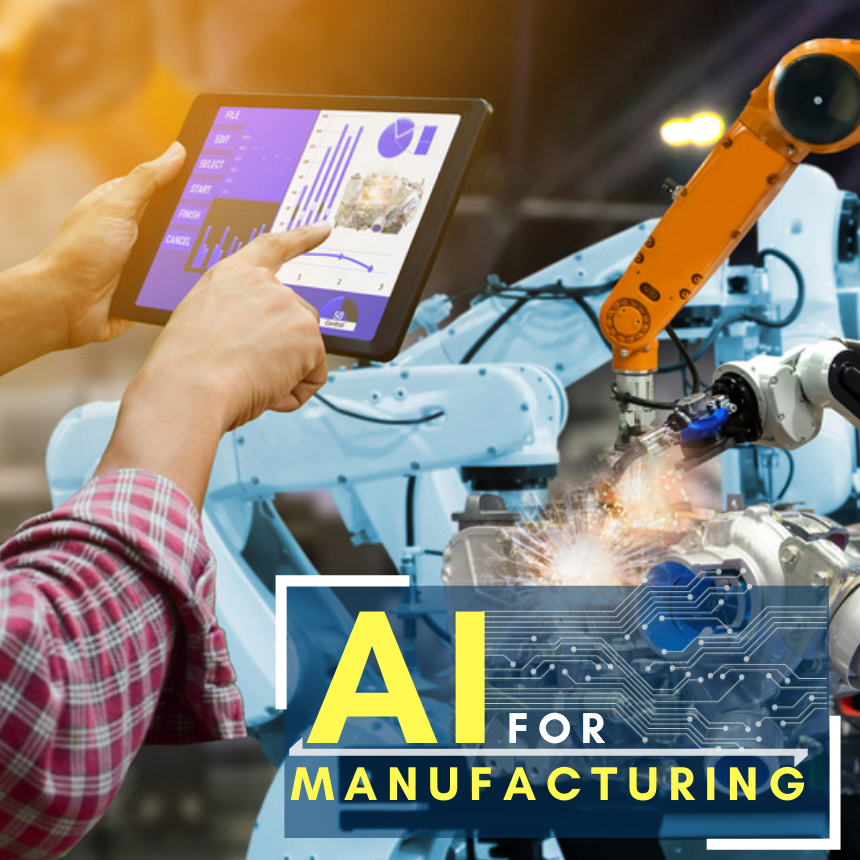
Artificial Intelligence (AI) has emerged as a game-changer in the manufacturing industry, reshaping traditional processes and paving the way for unprecedented efficiency and productivity. In this article, we will delve into four critical use cases of AI in manufacturing: Predictive Maintenance, Inventory Management, Production Planning, and Procurement.
AI in Predictive Maintenance
Predictive maintenance has become a cornerstone in modern manufacturing, as it allows businesses to anticipate equipment failures before they occur, minimizing downtime and reducing overall maintenance costs. AI in predictive maintenance plays a pivotal role by leveraging machine learning algorithms to analyze data from sensors, equipment logs, and historical maintenance records.
One of the key advantages of AI in predictive maintenance is its ability to detect patterns and anomalies in data that might go unnoticed by human operators. By continuously monitoring equipment performance, AI systems can predict when components are likely to fail, enabling proactive maintenance interventions. This not only prevents unexpected breakdowns but also extends the lifespan of machinery, optimizing the overall efficiency of manufacturing operations.
Furthermore, AI-driven predictive maintenance enhances safety by identifying potential hazards and ensuring that equipment meets industry standards. This proactive approach reduces the risk of accidents, protecting both machinery and personnel.
AI in Inventory Management
Inventory management is a critical aspect of manufacturing that directly influences operational costs and customer satisfaction. AI in inventory management brings a new level of sophistication by automating and optimizing the entire process. AI algorithms analyze historical data, demand forecasts, and supply chain dynamics to make accurate predictions about inventory levels and product demand.
One of the primary challenges in inventory management is striking the right balance between maintaining optimal stock levels and minimizing holding costs. AI addresses this challenge by dynamically adjusting inventory levels based on real-time demand fluctuations. This prevents overstocking or stockouts, ensuring that manufacturers have the right amount of raw materials and finished goods on hand to meet customer demand.
Moreover, AI enhances supply chain visibility, allowing manufacturers to anticipate disruptions and make informed decisions. This level of insight enables companies to implement “just-in-time” inventory practices, reducing excess inventory and associated holding costs.
AI in Production Planning
Efficient production planning is crucial for meeting customer demands, optimizing resource utilization, and minimizing production costs. AI revolutionizes production planning by analyzing vast amounts of data to create accurate and adaptive production schedules. Machine learning algorithms consider various factors, such as historical production data, market demand, and resource availability, to generate optimal production plans.
One of the significant advantages of AI in production planning is its ability to adapt to real-time changes. If unexpected events, such as machine breakdowns or supply chain disruptions, occur, AI algorithms can quickly adjust production schedules to minimize the impact on overall efficiency. This adaptability enhances agility in manufacturing processes, making it easier for companies to respond to changing market conditions.
AI-driven production planning also optimizes resource allocation, ensuring that equipment, labor, and materials are utilized efficiently. This leads to increased productivity and reduced operational costs, contributing to the overall competitiveness of manufacturing businesses.
AI in Procurement
The procurement process is a complex and multifaceted aspect of manufacturing that involves sourcing raw materials, negotiating contracts, and managing supplier relationships. AI brings unprecedented efficiency to procurement by automating routine tasks, analyzing market trends, and optimizing supplier selection.
One of the key applications of AI in procurement is the use of natural language processing (NLP) to analyze contracts and extract relevant information. This streamlines the contract review process, reducing the time and resources required for legal teams to review and negotiate agreements. Additionally, AI-driven systems can monitor supplier performance, identifying potential risks and opportunities for improvement.
Furthermore, AI enhances strategic decision-making in procurement by analyzing vast amounts of data to identify cost-saving opportunities, negotiate favorable terms, and identify alternative suppliers. This level of insight allows manufacturers to make informed decisions that align with their overall business objectives.
Conclusion
In conclusion, the integration of AI in manufacturing has ushered in a new era of efficiency, productivity, and competitiveness. The use cases discussed – predictive maintenance, inventory management, production planning, and procurement – showcase how AI is reshaping traditional manufacturing processes, optimizing resource utilization, and enhancing decision-making. As manufacturers continue to embrace AI technologies, the industry is poised for continuous innovation and evolution, driving unprecedented advancements in efficiency, sustainability, and overall operational excellence.
 AI Deep Learning