Introduction
In the era of Industry 4.0, Artificial Intelligence (AI) is emerging as a transformative force in manufacturing, reshaping traditional processes and enhancing overall efficiency. This article explores the profound impact of AI in manufacturing, focusing on key use cases: predictive maintenance, inventory management, production planning, and procurement. These applications leverage the power of AI to optimize operations, reduce costs, and propel the manufacturing industry into a new era of innovation.
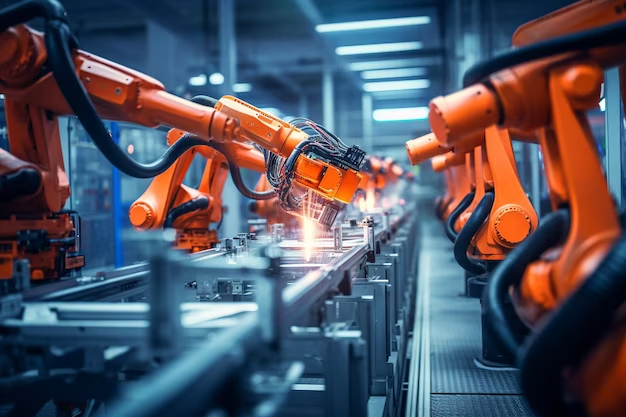
AI in Predictive Maintenance
AI in Predictive maintenance stands at the forefront of applications in manufacturing, representing a paradigm shift from traditional, reactive maintenance approaches. The core idea is to use AI algorithms to analyze real-time data from sensors and machinery, predicting equipment failures before they occur.
By continuously monitoring equipment conditions, AI identifies patterns and anomalies in data, allowing manufacturers to schedule maintenance during planned downtime. This proactive approach minimizes unexpected breakdowns, reduces downtime, and optimizes overall equipment effectiveness. The result is increased reliability, cost savings through optimized maintenance schedules, and improved operational efficiency.
Predictive maintenance not only enhances equipment reliability but also contributes to resource optimization. By addressing maintenance needs precisely when required, manufacturers can minimize the unnecessary replacement of parts and extend the lifespan of critical machinery, translating into long-term cost savings.
AI in Inventory Management
Effective inventory management is a critical aspect of manufacturing operations, impacting production efficiency and customer satisfaction. AI in inventory management addresses the challenges of maintaining optimal inventory levels, minimizing both overstock and stockouts.
AI algorithms analyze historical data, demand forecasts, and external factors in real-time to optimize inventory levels. By considering variables such as seasonality, market trends, and supplier performance, AI ensures that manufacturers have the right amount of raw materials and finished goods to meet demand without excess or shortage.
This dynamic approach to inventory management not only reduces carrying costs but also enhances customer satisfaction by ensuring timely order fulfillment. AI-driven inventory management contributes to leaner, more efficient supply chains and provides manufacturers with the agility to respond to market fluctuations effectively.
AI in Production Planning
Production planning is a complex task involving the coordination of resources, scheduling operations, and optimizing workflows. AI in production planning revolutionizes this process by analyzing vast amounts of data to make informed decisions and enhance overall efficiency.
Machine learning algorithms consider factors such as historical production data, market trends, and supply chain information to optimize production schedules. This results in reduced lead times, improved production throughput, and increased overall efficiency.
AI-driven production planning is characterized by adaptability and responsiveness. Manufacturers can quickly adjust production schedules based on real-time changes in demand or unforeseen disruptions, ensuring a more agile and streamlined manufacturing process.
The integration of AI in production planning not only enhances operational excellence but also contributes to sustainability efforts. By minimizing waste and optimizing resource utilization, manufacturers can achieve both cost savings and a reduced environmental footprint.
AI in Procurement
Procurement is a fundamental aspect of manufacturing, and AI is playing a crucial role in optimizing sourcing and supplier management. AI in procurement systems automate routine tasks, improve decision-making, and enhance supplier relationships.
These systems leverage advanced analytics and machine learning to analyze supplier performance, track market trends, and identify potential risks in the supply chain. Automated processes, such as invoice processing and vendor communication, free up procurement professionals to focus on strategic activities like supplier relationship management and strategic sourcing.
AI-driven procurement contributes to cost savings, risk mitigation, and more efficient supply chain management. By identifying opportunities for cost optimization and negotiating favorable terms with suppliers, manufacturers can achieve a competitive edge in the market.
Conclusion
The integration of AI into manufacturing processes is driving a paradigm shift, offering unprecedented efficiency, optimization, and innovation. The use cases discussed – predictive maintenance, inventory management, production planning, and procurement – showcase the versatility and impact of AI in the manufacturing industry.
As manufacturers embrace AI technologies, they stand to gain a competitive edge by enhancing operational excellence, reducing costs, and responding more effectively to market dynamics. The synergy between human expertise and AI capabilities promises to create a manufacturing ecosystem that is not only more efficient but also more resilient, adaptive, and sustainable in the face of evolving challenges and opportunities. The journey towards smart manufacturing powered by AI is not just a technological evolution; it’s a transformative leap into a future where efficiency, innovation, and sustainability coalesce to redefine the manufacturing landscape.
 AI Deep Learning